Before the Storm: 'I Couldn't Afford to Leave Lika and Croatia'
Nenad Šarić Giga, a 71-year-old veteran from the Šuplja glava hill, recalls the death of Brigadier Ivan Čanić Baja and the importance of humanity in war.
Nenad Šarić Giga, a 71-year-old veteran from the Šuplja glava hill, recalls the death of Brigadier Ivan Čanić Baja and the importance of humanity in war.
On the eve of another anniversary of the Operation Storm military-police action, Nenad Šarić Giga, a 71-year-old volunteer in the Homeland War, teacher, athlete, and musician, shared his harrowing testimony with Novi list. Through the story of losing comrades and the bitterness of expulsion, his message remains focused on what matters most-people.
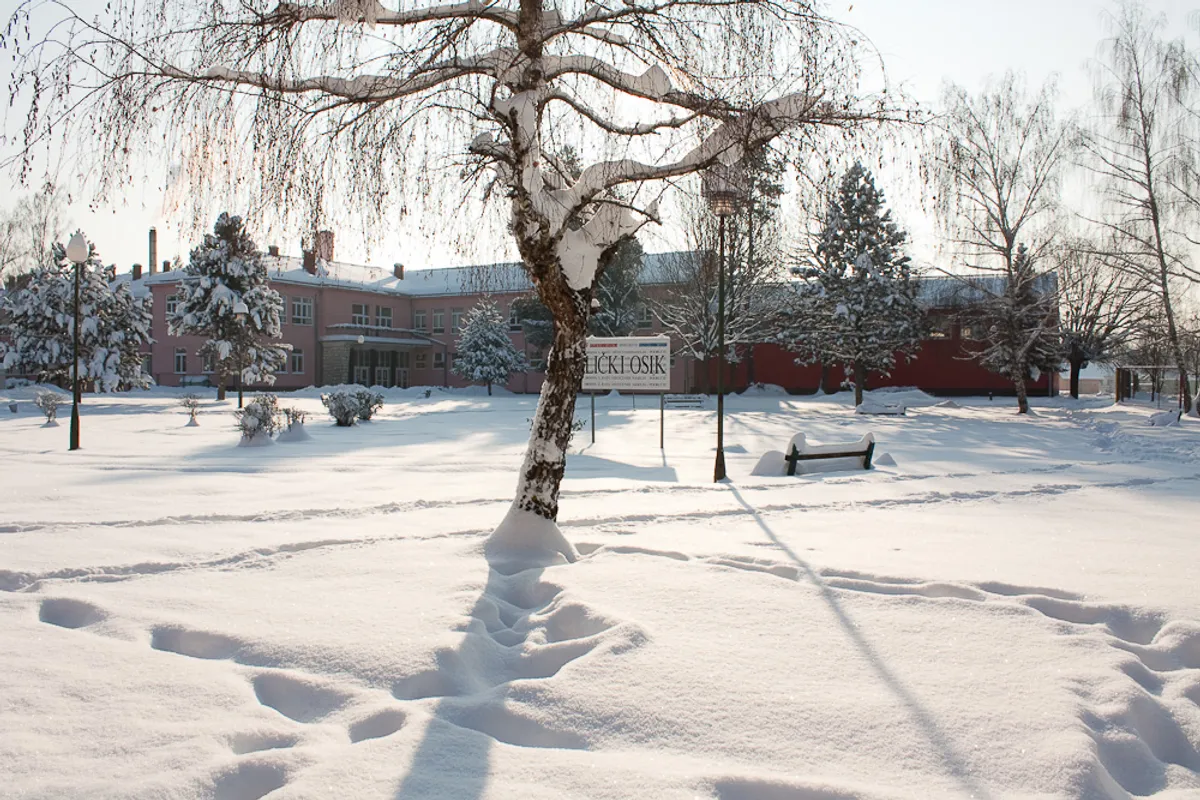
Šarić Giga, whom they call "the last troubadour and romantic of Lički Osik," recalled a childhood and youth interrupted by war. He and his elderly father Ante, an honest Dalmatian partisan who continued working at the "Marko Orešković" factory after World War II, were expelled overnight by friends from their hometown, renamed Teslingrad.
Although he could have gone to his brothers in Germany, he chose to stay in Lika. "I couldn't afford to leave Lika and Croatia. I was happy to be able to watch the town of my youth from the Šuplja glava hill, less than a kilometer away," he recalled. There, as a sergeant in the 118th Brigade, later the 118th Home Guard Regiment, he spent almost the entire war, repelling hundreds of enemy attacks.
A key moment in his memory is tied to August 3, 1995. That evening, his unit was visited by the commander, Brigadier Ivan Čanić Baja. "Anyone who knew him will confirm he was a superb officer, commander, and man. We were a bit surprised when he said, all happy: 'Just let us finish Operation Storm and end this damned and imposed war!'" Giga recounted. That was the first time he heard the name of the final operation. The unit was deployed along an eight-kilometer stretch, all the way to the Pogledalo hill.
Unfortunately, that was the last dawn for Brigadier Baja. He was killed in a direct attack near Široka Kula on Vujatovo brdo on August 4, 1995, just four days before his 40th birthday. Before Operation Storm, he had fought at Tulove grede and in the Medak Pocket. He was the highest-ranking officer of the Croatian Army killed in the Homeland War and was posthumously promoted to the rank of general.
Throughout the war experience, Giga was accompanied by Lieutenant Zoran Trtica from Gospić, an artillery officer whom he says is a "miracle" that he wasn't wounded or killed. While many comrades faltered after the war, Trtica found peace in art.
"I often joke and say that my friend Zoran was a master of artillery during the war, after the war a master of the tractor and chainsaw, and now he has pleasantly surprised us all by replacing all that with a painter's brush and easel," Giga said. His fellow citizens recently saw 52 of his paintings in Gospić, and he presented his first exhibition in Otočac. Before the war, Martić's paramilitary forces had detained him several times because they found him suspicious-he was quiet, didn't involve himself in politics, and just did his job.
Giga has now returned to Lički Osik, where he lives with his son Ante, and he is especially pleased that his address is on General Ivan Čanić Baja Street. Still, he doesn't hide his bitterness. "One of the injustices I can't tolerate today is that it sometimes seems to me that we Croatian veterans have become a nuisance to someone, that we are just a number. We mostly live very modestly and ask for nothing," he emphasized.
His life philosophy, shaped by war and the works of his favorite writer Remarque, boils down to a simple thought: "Ranks don't matter; people do! During the war, I lost two soldiers, and that's something you don't forget. Every Operation Storm, I remember all those dear people who are no longer with us."