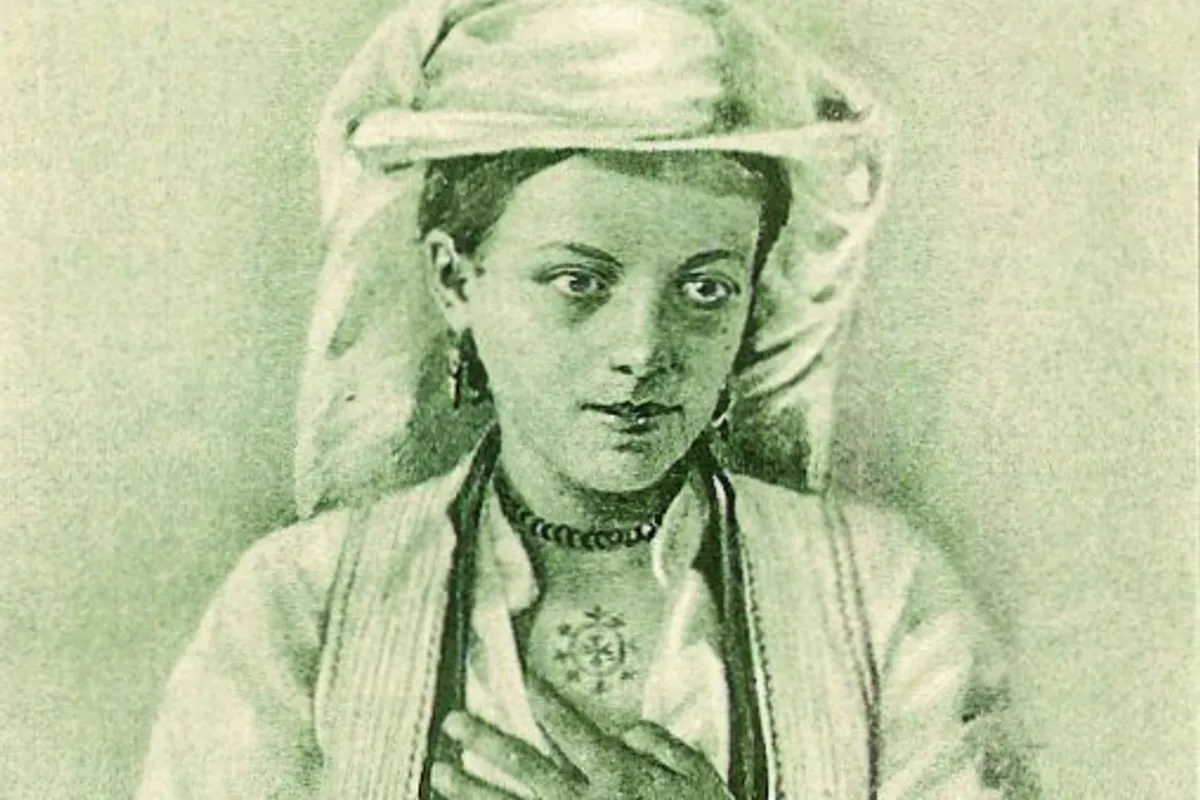
A custom that for generations was deeply etched, both literally and symbolically, into the identity of Catholic women in Bosnia and Herzegovina has finally found its place on paper. This is the book "Sicanje", which presents 24 moving testimonies of women about the tradition of tattooing the skin by pricking with a needle and applying a dark mixture, with its promotion scheduled for September 6, 2026, at the Prozor Culture Center.
One of the recorded testimonies is that of Mare Bojić, who received her first tattoo at just seven years old. The last one followed three years later, making her the fourth generation of women in her family to continue this painful but proud tradition. "The tattooing penetrated all the way to the bone," Mare recounted, describing a process that, as she realized years later in religious education classes, inscribed on her skin her belonging to the Croatian and Catholic identity.
From Personal Connection to Documenting Heritage
Behind this valuable project are two authors whose life paths led them from Bosnia and Herzegovina to the diaspora. Marija Maračić, originally from Kraljeva Sutjeska near Kakanj, now lives in Cleveland, where she earned a master's degree in art history in 2016. Her collaborator Josipa Karača was born in Donja Vast near Prozor/Rama and has lived in Austria since 1990. She graduated in pedagogy from the University of Innsbruck in 2014 and currently works as a trainer at an educational center for deaf and hard-of-hearing individuals.
It was their personal connection to Bosnia and Herzegovina that served as a key driving force. During the summer of 2019, both set out to record women's testimonies about a custom that, through generations, was tied to faith, belonging, and the preservation of identity. The motifs on the skin were most often linked to Christian symbols, and the custom itself is characteristic of central Bosnia and parts of Herzegovina.
"My greatest commitment is to create space for women whose stories should never be forgotten. For women who kept this tradition alive in quiet, everyday moments, even though history rarely mentions them by name," Maračić emphasized.
A Bridge to the Diaspora
The book "Sicanje" is not intended only for readers in this region. The testimonies are written in Croatian but accompanied by translations into English and German. In this way, the authors build a bridge to the Croatian diaspora, especially the second and third generations who learn about their ancestors' traditions through family stories. The book will be available for order from three key regions connected to this story: the European Union, Bosnia and Herzegovina, and the United States.