Trump Demands Billions from Iran Before Peace Deal
US President seeks reparations for 50 years of 'damage,' including protester deaths and the USS Cole attack, as oil prices rise and Oman talks progress.
US President seeks reparations for 50 years of 'damage,' including protester deaths and the USS Cole attack, as oil prices rise and Oman talks progress.
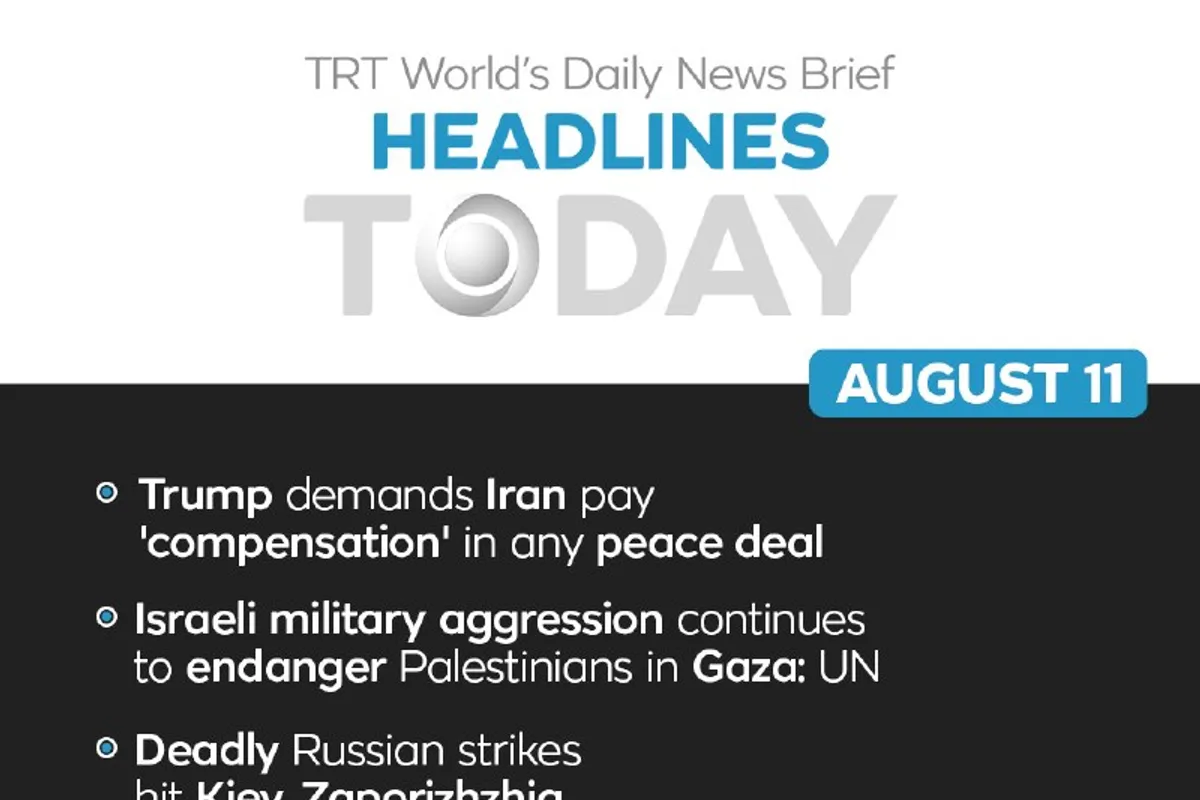
U.S. President Donald Trump on Monday surprised with a new, tough demand in negotiations with Iran, requiring Tehran to pay reparations for half a century of conflicts and attacks before any final peace agreement is reached. The move, which came in response to Iranian demands for compensation and sanctions relief, further complicated already fragile efforts at de-escalation and the reopening of the strategically vital Strait of Hormuz, whose closure since the war began in February has led to a global rise in energy prices.
Speaking from the White House, Trump made it clear he expects financial compensation from Iran. "We will be asking for money for the damage they have caused over 50 years," Trump said, adding that the reparations should cover the deaths of civilian protesters in Iran itself, as well as U.S. soldiers across the region. "So, if reparations are to be paid, I think Iran should pay them," the U.S. president said.
Trump specifically stated that Iran must answer for the deaths and damage inflicted on residents of Lebanon, Syria, Yemen, and Gaza. In a post on his social media platform Truth Social, he wrote: "Also, when it comes to negotiations with Iran, Iran should be held accountable for the damage and deaths it has caused to the people of Lebanon, Syria, Yemen, and Gaza!"
Since the war began in February, Trump has encouraged protesters to overthrow the Iranian government, and human rights organizations claim Tehran has continued its crackdown on opponents since then.
In his argument, Trump also touched on the internal situation in Iran, asserting that the Iranian government killed about 52,000 protesters who took to the streets in late 2025 and during 2026 within six weeks. This figure is significantly higher than estimates from independent organizations. The U.S.-based human rights group Human Rights Activists News Agency (HRANA) reported in February approximately 7,000 deaths, of which 6,500 were protesters.
Additional controversy was sparked by Trump's demand that Iran pay reparations to the families of 17 U.S. sailors killed in the attack on the USS Cole in Yemen in October 2000. Officially, responsibility for that attack was attributed to the terrorist group al-Qaeda, not the Iranian government.
The Strait of Hormuz, through which roughly one-fifth of the world's oil and liquefied natural gas passed before the conflict, has been practically closed since the war began. Although a preliminary peace agreement was signed in June, it quickly collapsed after the U.S. re-imposed a blockade on Iranian maritime traffic in July. Iran responded with attacks on U.S. allies and commercial ships passing through the strait without its permission.
Iran earlier announced it was close to a final agreement with Oman to establish new shipping lanes between the two countries, which would give Tehran greater control over the key waterway than before the war. Iranian Foreign Ministry spokesman Esmaeil Baghaei said negotiations with Oman on establishing new shipping lanes are "progressing smoothly and constructively." He added that a map of shipping routes has been agreed upon, though some technical issues remain unresolved. On the other hand, U.S. officials have repeatedly ruled out any agreement that would allow Tehran to charge for access to the strait.
On Monday, Trump repeated his claim, which officials consider inaccurate, that "only the U.S. Navy currently controls the Strait of Hormuz."
Following Trump's new demands, oil prices rose by five percent on Monday, reflecting market concerns that a quick resolution is increasingly unlikely. The war is highly unpopular among American voters, especially in rural areas that have traditionally supported Trump, and high fuel prices are a key issue ahead of the congressional elections in November. Democratic Representative Bill Keating commented to CNN: "What we're seeing here is the beginning of capitulation. That's the reality. It's starting to sink in for them."
Alongside the reparations demands, Trump also claimed that the United States has full control over Iranian money and that Washington is effectively acting as Tehran's banker. He highlighted that Iran faces 300 percent inflation, a currency in free fall, and increasing difficulties in paying its soldiers. Referring to further steps toward Iran, Trump listed three options: maintain current pressure, rely on economic pressure, or, as he put it, "hit them very, very hard."
Tensions between the two countries have also escalated behind the scenes. According to a reconstruction by the Washington Post, U.S. intelligence agencies assessed as credible Iranian threats to assassinate Trump and possibly attack the presidential aircraft during the NATO summit in Ankara in early July. This led to a dramatic escape plan: Trump boarded the older Air Force One under the watchful eyes of cameras and gave statements, then was secretly transferred in a catering container to a smaller military C-32A aircraft, which safely flew him to the United Kingdom. The old presidential plane served as a decoy, and some White House staff and journalists on board were not informed that Trump was not with them. White House Communications Director Steven Cheung did not comment on this reconstruction but described the new Air Force One, a donated Boeing 747-8 from Qatar, as a "top-tier aircraft" with "high security protocols."