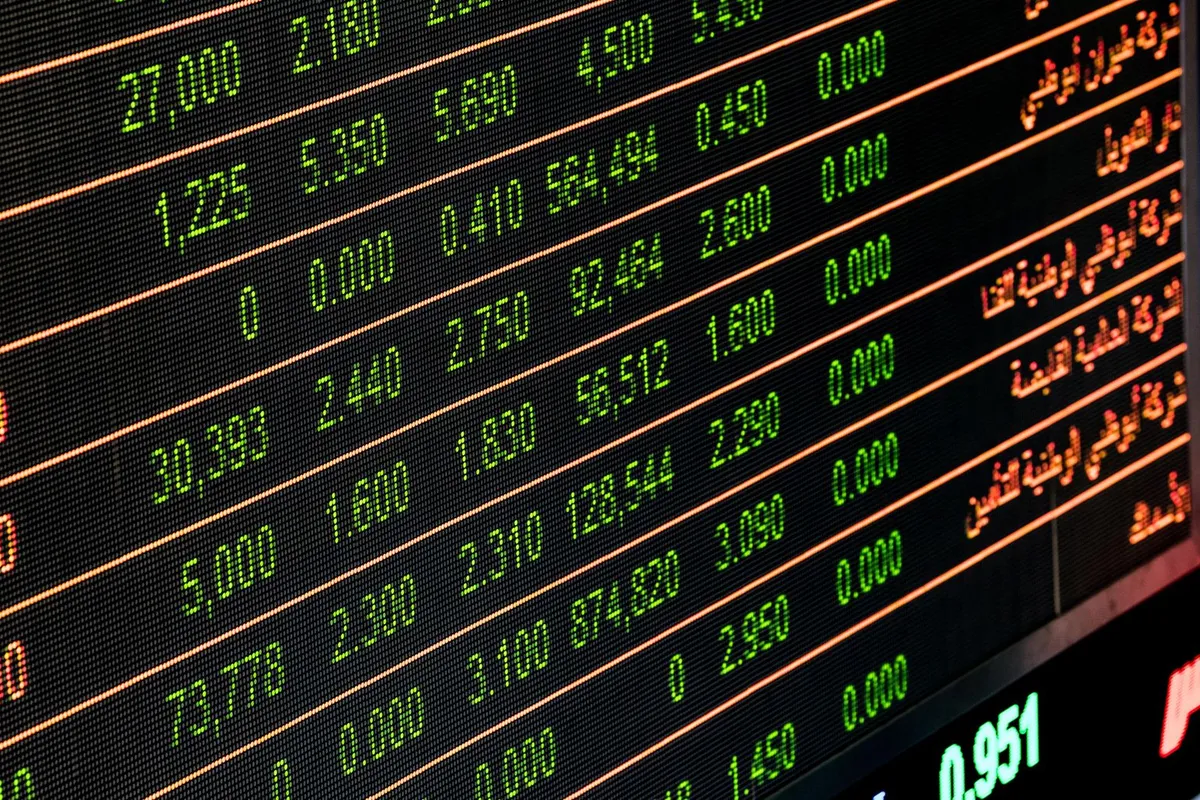
Wall Street sinks after Fed, investors worried by massive AI investments from Meta and Microsoft
Dow Jones lost 2.19 percent, and fears of liquidity strain in the tech sector spilled over to Asian markets
Dow Jones lost 2.19 percent, and fears of liquidity strain in the tech sector spilled over to Asian markets

Trading on Wall Street on Wednesday, July 29, 2026, ended with a sharp decline in key stock indices. The drop followed the US central bank's (Fed) decision to keep interest rates unchanged, as well as growing investor concern that massive spending on artificial intelligence is straining the liquidity of tech giants, reports Poslovni dnevnik.
The Dow Jones index fell 2.19 percent to 51,594 points. The broader S&P 500 dropped 1.52 percent to 7,316 points, touching its lowest level in a month, while the tech-heavy Nasdaq sank 1.74 percent to 24,442 points. According to Poslovni dnevnik, the Nasdaq was thus nine percent below its record high reached in June.
As expected, the Fed kept its key interest rate range at 3.5 to 3.75 percent. However, among the 12 voting members of the Federal Open Market Committee, three voted for a 25-basis-point rate increase. "The Fed held its course, as expected. The bigger question now is how much pressure it will be under to raise rates in September. Inflation is red hot, and with rising crude oil prices, the market expects a rate hike in September," Ryan Detrick of Carson Group commented for Poslovni dnevnik.
After the market close on Wednesday, attention turned to quarterly results from Meta Platforms and Microsoft. Meta reported that its free cash flow in the second quarter fell 91 percent compared to the same period last year, to $784 million. In the second quarter of 2025, that figure was $8.55 billion. The news sent Meta's stock down about five percent in after-hours trading.
On the other hand, Microsoft reported a 30 percent increase in net profit to $35.77 billion and an 18 percent rise in revenue to $90 billion. However, investors were concerned that capital expenditures and finance leases rose 69 percent in the same period to $41 billion, reducing free cash flow by 23 percent to $19.64 billion. Despite these figures, Microsoft's stock gained about eight percent in after-hours trading. However, since the start of 2026, it is still down 19 percent, compared to the S&P 500, which rose seven percent over the same period.
Asian markets were cautious on Thursday, July 30, 2026. The MSCI Asia-Pacific index fell 0.49 percent, while Japan's Nikkei rose two percent, writes Financije.hr. South Korea's Kospi weakened 1.72 percent and is headed for a weekly drop of 13 percent. South Korean chipmakers are under particular pressure; the sell-off in tech stocks in that country has erased more than $2 trillion in market value, reflecting global concern over the profitability of large AI investments.
European stock markets ended Wednesday without significant swings. Frankfurt's DAX stagnated at 25,460 points, London's FTSE gained 0.34 percent to 10,908 points, while Paris's CAC fell 0.6 percent to 8,408 points, reports Poslovni dnevnik.