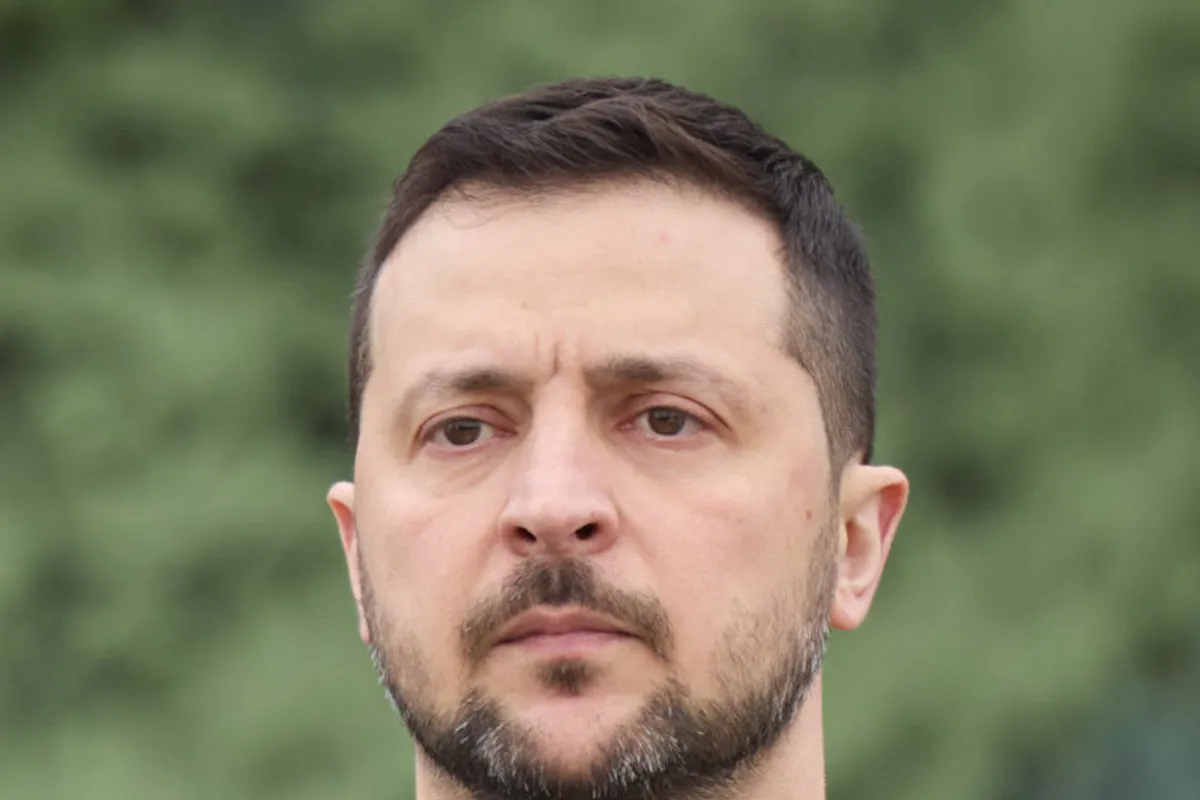
The first meeting between Volodymyr Zelensky and Aleksandar Vučić in Belgrade last weekend echoed throughout the region. The Ukrainian president touched on one of the most volatile issues in the Balkans by stating that his country does not intend to recognize Kosovo's independence, which immediately sparked a wave of reactions.
Pristina Reacts Without Hesitation
A large banner in blue and yellow colors reading "Free Ukraine," which had stood on a main road in Pristina since 2022, has been removed. The move was explained by Mayor Përparim Rama, who said he still sympathizes with "peoples facing war, violence, and persecution," but that it is clear "respect must be mutual."
Glauk Konjufca, Kosovo's foreign minister, did not hide his disappointment. He noted that he received the news "with regret" and warned that such a narrative is reminiscent of "Russian attempts to use Kosovo as a precedent." It is worth recalling that Vladimir Putin regularly cites the Kosovo case to justify the invasion of Georgia in 2008 and the subsequent annexation of Crimea in 2014.
Threat to Divert the Ibar and Sharp Rhetoric
Following the meeting between the two leaders, tensions between Belgrade and Pristina have further escalated. Vučić threatened to physically divert the course of the Ibar River, which flows from Serbia towards Kosovo. This announcement came after Kosovo authorities demolished houses owned by Serbs on the shores of the reservoir. A potential diversion of the river would seriously jeopardize the water supply for a large part of Kosovo and the operation of its largest power plant, for which the reservoir is crucial for cooling.
Meanwhile, a heated polemic developed on social media platform X. Albanian Prime Minister Edi Rama accused Serbia of living in a "political bubble" and denying reality, claiming that "Serbia lost Kosovo long ago." On the other hand, Serbia's chief diplomat Marko Đurić responded with sharp messages.
The Key Lies in Soviet Ammunition
What prompted the Ukrainian leader to engage in the Balkan knot is explained by Politico's analysis. The answer most likely lies in weaponry. Serbia still produces vast amounts of Soviet-caliber ammunition, which Kyiv can hardly obtain from Western allies equipped with NATO standards. The Ukrainian military still heavily relies on heavy howitzers and tanks from the Soviet era, crucial for the fighting in Donbas.
Florian Bieber, director of the Center for Southeast European Studies at the University of Graz, summarized the situation for Politico: "Ukraine finds itself in a situation where it cannot afford to deal with issues that are not among its immediate needs, and Vučić is more important to him at this moment." Although Vučić publicly refuses to impose sanctions on Russia and maintains close ties with the Kremlin, he appears willing to quietly supply this ammunition to Kyiv.
Calculating Towards Brussels
Vučić's rapprochement with Zelensky could also have domestic political undertones. In recent months, Brussels has been issuing increasingly harsh criticism over violence against protesters in Serbia and the "erosion of democratic standards." "He hopes that in the coming months he will receive fewer critical messages due to his close, or at least symbolically closer, relations with Zelensky. Vučić is doing this to strengthen his negotiating position towards the European Union ahead of possible elections in the country," Bieber explained.
Kosovo Remains a Source of Division
Kosovo declared independence in 2008 and has since been recognized by more than a hundred countries, including the United States, the United Kingdom, and 22 of the 27 EU member states. The former Serbian province also submitted an application for EU membership in December 2022. Nevertheless, the circumstances under which it separated from Serbia continue to create deep divisions, especially among EU members like Spain and Cyprus, which face their own separatist issues and refuse to recognize Kosovo's independence.
"Depending on which side you are on in that debate, you will have a different view of what Kosovo's independence means for other conflicts and other territorial disputes around the world," Bieber concluded for Politico.