Croatia has entered the largest investment cycle in railway infrastructure in its history. While new roads are being built in parallel, reconstruction of existing tracks and construction of entirely new lines are underway across the country, and in the next ten years, two projects of national significance are expected to be realized: the lowland railway from Zagreb to Rijeka and the railway connection of Istria with the rest of Croatia.
From Karlovac to Zagreb in 20 Minutes
The key project already underway is the reconstruction of the 44-kilometer-long railway between Karlovac and Zagreb. The works include the construction of new bridges and viaducts, as well as the renovation of stations and stops, with completion expected by the end of 2029. Once finished, trains will be able to travel at speeds of up to 160 kilometers per hour on this section, reducing travel time between the two cities to just 20 minutes.
In the past few days, work has begun on laying the second track on the stretch from Hrvatski Leskovac to the capital. This is a prelude to a much more ambitious undertaking: the construction of the lowland railway from Zagreb to Rijeka, which will be 56 kilometers shorter than the existing route.
Lowland Railway Zagreb-Rijeka: Longest Tunnel and Dozens of Viaducts
This is an entirely new double-track, electrified railway designed for speeds of 120 to 160 kilometers per hour, depending on whether freight or passenger trains are using it. The most challenging part will be traversing the hilly terrain, which will be addressed by constructing over 30 bridges, viaducts, and tunnels.
The most impressive part of the project is certainly the tunnel through Velika Kapela, stretching an impressive 14 kilometers, which will become the longest in Croatia. Given the entirely new route, the construction of five new stations and one stop is planned by 2036.
"The estimated value of the works is around three billion euros, while the final value will be more precisely defined after the preparation of the conceptual design and analysis of market prices at the time of tendering for the execution of works. The project will build a modern double-track and electrified railway connection between Zagreb and Rijeka, overcoming the limitations of the existing mountain railway and creating a fast, reliable, and higher-capacity railway corridor towards Central Europe," stated the Ministry of the Sea, Transport and Infrastructure.
Istria Gets a 15-Kilometer Tunnel
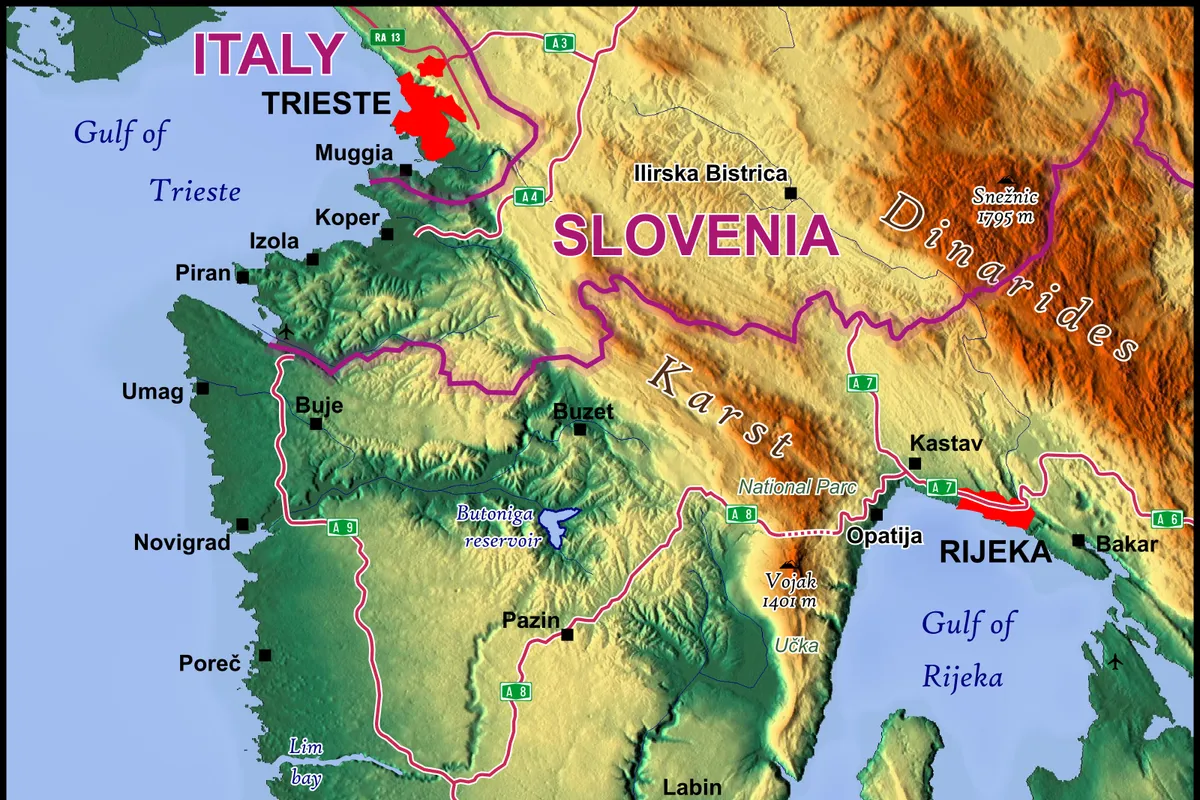
The second major project that will mark the next decade is connecting Istria with the rest of the Croatian railway network. Currently, studies and the main design are being prepared, and permits for the construction of the Ćićarija tunnel and the associated connecting lines are being obtained. The value of these preparatory activities is two million euros, with completion expected by 2029.
The plan includes the construction of a tunnel of approximately 15 kilometers and a viaduct of approximately four kilometers, which would finally provide Istria with a direct railway link to the rest of the country.
Billions of Euros from European Funds
Through European funding sources, within the financial periods from 2014 to 2020 and from 2021 to 2027, projects with a total value of around 5.57 billion euros have been contracted and are being implemented in transport infrastructure. Of this amount, around 3.45 billion euros refers to non-repayable European Union funds. These undertakings are financed through the Operational Programme Competitiveness and Cohesion, the Competitiveness and Cohesion Programme 2021-2027, the National Recovery and Resilience Plan, and the Connecting Europe Facility (CEF).
The largest share of investments is directed precisely at railways. Currently, works worth more than 1.7 billion euros are underway, and in the next 10 years, an additional six billion euros from various sources is planned. Among the most significant active projects are the reconstruction and construction of the second track on the Dugo Selo, Novska line (worth around 900 million euros), the modernization of the Hrvatski Leskovac, Karlovac section (280 million euros), and the completion of works on the Dugo Selo, Križevci and Križevci, Koprivnica, state border with Hungary sections. Work is also being done on many renovations of local, regional, and international lines, including the Pitomača, Kloštar, Generalski Stol, Oštarije, Ogulin, Moravice, Karlovac, Ozalj, Knin, Zadar, Osijek, Koška sections, and others.
New Trains for the New Network
In addition to infrastructure works, significant funds are being invested in the rolling stock. Already in service are 70 new low-floor trains, whose procurement cost 363.4 million euros. An agreement has been reached for the purchase of six trains that use electric and diesel power for the Zagreb-Split line, with a total price of 57.3 million euros. By 2029, five more electro-diesel, ten electro-battery, and four battery trains will arrive, along with three charging stations, with a total value of 228.8 million euros. The possibility of securing funds for the procurement of an additional 30 new trains from the Social Climate Fund is also being prepared.