Motovun: Istria's Medieval Jewel Overlooking the Mirna Valley
This medieval hilltop town above the Mirna Valley blends rich history, top-tier cuisine, and a family winemaking philosophy that brooks no compromise.
This medieval hilltop town above the Mirna Valley blends rich history, top-tier cuisine, and a family winemaking philosophy that brooks no compromise.
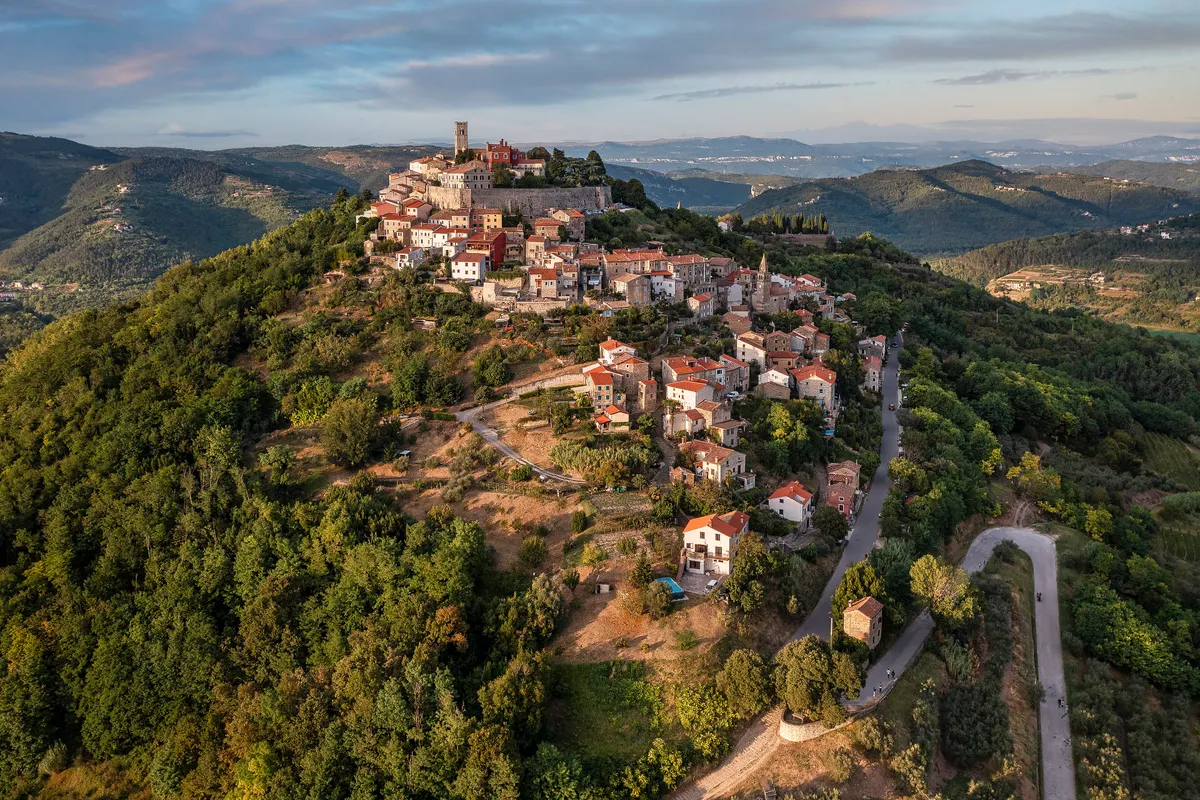
Perched on a picturesque hill overlooking the Mirna River valley, Motovun is one of Croatia's most charming and best-preserved medieval towns. Surrounded by vineyards, olive groves, and the famed forest, it offers an extraordinary mix of deep history, excellent cuisine, and stunning views that draw tourists, as reported by Gloria.
Its past begins in prehistoric times, when an Illyrian fort stood on this hill. The Middle Ages shaped the town's present appearance, and from the 13th century, Motovun came under the rule of the Venetian Republic. From that era come the magnificent city walls, gates, and many palaces that still tell the story of its rich history.
At the heart of the town lies the main square, dominated by a 13th-century Romanesque-Gothic bell tower, 27 meters tall. Beside it stands the Church of St. Stephen, completed at the end of the 16th century according to plans by the renowned Venetian architect Andrea Palladio. The square also features historic palaces and the town loggia, which together provide a true sense of an old medieval town.
Strolling through the narrow stone streets, you'll discover numerous galleries, souvenir shops, small family-run stores, and traditional taverns where visitors can experience local culture and daily life.
Nature lovers can explore cycling and hiking trails that wind through vineyards and forests, while the former Parenzana railway line has been transformed into a popular route for cyclists and recreational users. Motovun is especially renowned for truffles, and the nearby Motovun Forest is one of Europe's most famous spots for finding white truffles.
In many restaurants, you can savor truffle dishes, homemade pasta, Istrian prosciutto, cheeses, and excellent local wines, particularly Malvazija and Teran. Although Istria is often compared to famous wine regions like Tuscany, its main advantage is that it has never aspired to be a copy of anywhere else; instead, it has developed its own character based on indigenous grape varieties, rich culture, premium olive oils, traditional cuisine, and people who believe that the best results come from patience, not haste.
It is precisely this philosophy that the Rožanić family has lived by for years, led by Mladen Rožanić, a man who decided to craft wines without compromise and let nature play the leading role in every bottle. The six wines in the Sorelle collection are named after Mladen Rožanić's six daughters, each reflecting a different temperament, personality, and vitality.
Lara, Petra, Sara, Zara, and other family members are entering the world of wine, illustrating that wine represents more than just a product-it is a memory, an emotion, and an extension of family heritage.